A missing tooth or a complete loss of teeth can affect much more than the way you look. It can change simple moments like enjoying your favorite foods, speaking with ease, and feeling comfortable around others. At some point, you’ll face a decision that feels bigger than it should: dental implants vs dentures. Both restore your smile and your ability to chew, but they work very differently, last very differently, and cost very differently.
Here’s the honest answer most people want but rarely get: there’s no universally better option. The right choice depends on your jawbone density, your overall health, your budget, and how much time you’re willing to spend on the process. What works beautifully for one person may not be the right fit for another.
This guide walks you through everything side by side, so you can have a real conversation with your dentist, not just a sales pitch.
What Actually Sets Implants and Dentures Apart
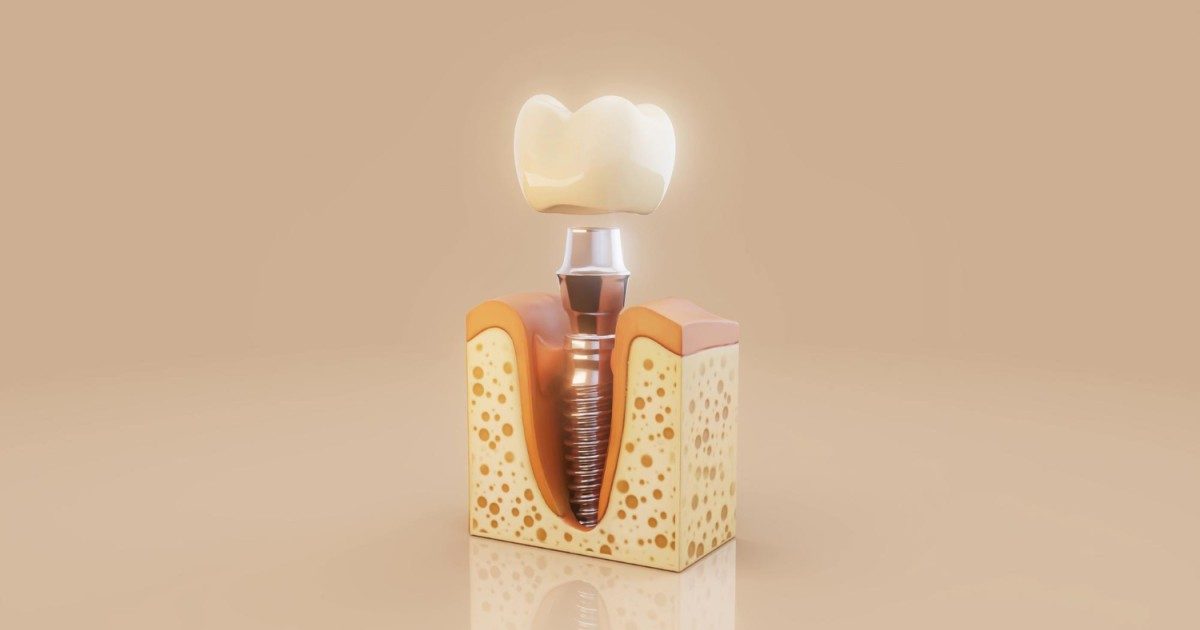
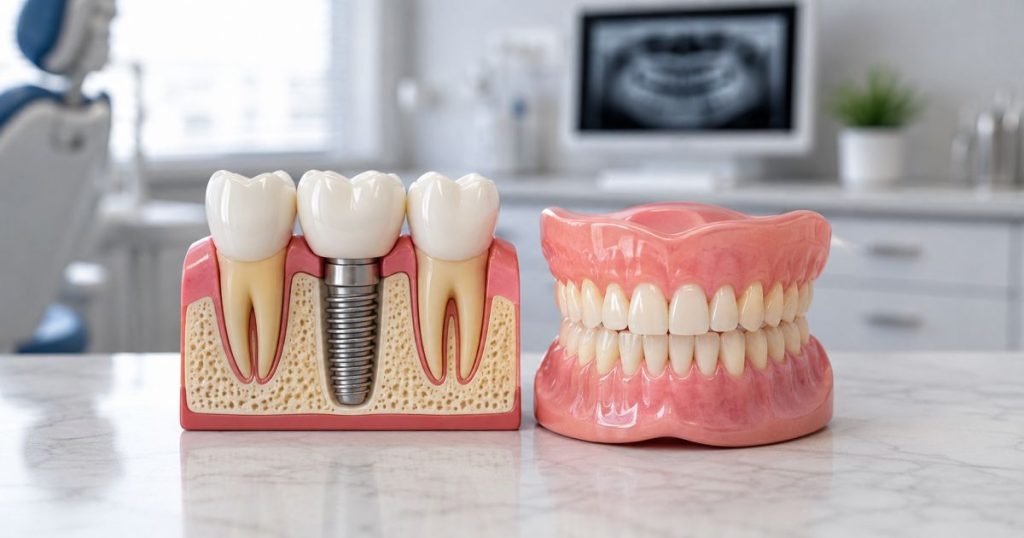
A dental implant is a titanium post surgically placed into the jawbone. It replaces the root of a missing tooth and stays fixed permanently. A denture is a removable appliance that sits on top of the gums and replaces multiple or all missing teeth without any surgery.
The gap between them goes beyond just how they’re placed: they differ in how they affect your jawbone over time, how they feel while eating, how long they last, and what they cost upfront versus over a lifetime.
The table in the following breaks it all down, factor by factor.
Related comparison guide: Dental Implants vs Bridges: Cost, Lifespan & Care
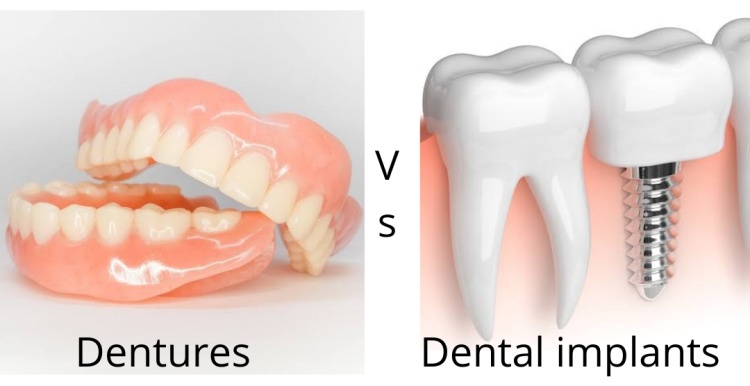
Dental Implants vs Dentures: Side-by-Side Comparison
Replacing missing teeth is a major decision, and understanding the differences between dental implants vs dentures can help you choose the right solution for your needs. While both options can restore your smile, they differ in stability, comfort, durability, and how they support your long-term oral health.
Explore the side-by-side comparison below to see how dentures vs implants compare across the factors that matter most:
| Factor | Dental Implants | Dentures |
| Stability | Fixed in the jaw; won’t move | Removable; can shift or slip, especially the lower denture |
| Bone Health | Stimulates the jawbone through osseointegration; slows alveolar bone resorption | Does not stimulate bone; the ridge continues to shrink over time, contributing to facial changes and a looser fit |
| Chewing & Diet | Near-natural bite force; very few food restrictions | Reduced chewing efficiency; hard or sticky foods may be difficult |
| Longevity | ~96% still in place at 10 years; often lifetime with proper care (PubMed) | Typically need relining or remaking every 5–10 years |
| Procedure | Minor surgery + healing period of several months (osseointegration) | Non-surgical; multiple impressions and fittings, no healing time required |
| Maintenance | Brush and floss like natural teeth; regular dental checkups | Remove and soak daily; clean thoroughly; periodic professional relines |
| Feel | Closest to natural teeth; no palate coverage needed | Bulkier feel; upper denture typically covers the palate |
| Cost (Toronto / Ontario) | $3,000–$6,000 per implant (post + abutment + crown); All-on-4 full arch: $25,000–$30,000 | $1,500–$3,500 per arch for complete dentures |
| Best For | Long-term value, sufficient jawbone, desire for a fixed result | Faster solution, non-surgical, lower upfront cost, many or all teeth missing |
Pro tip on aftercare: Like natural teeth, implants can develop gum-related complications (a condition called peri-implantitis) if oral hygiene isn’t maintained. Regular checkups help catch this early.
A Note on Cost: The implant figures above don’t include procedures that may be needed beforehand (such as bone grafting, a sinus lift, or sedation) which can add significantly to the total.
On the denture side, costs accumulate over time: relining, repairs, and eventual replacement every 5–10 years mean the lifetime cost of dentures can end up closer to implants than the upfront numbers suggest.
(Cost figures sources: hellodent.com/thejunction.dentist/ ottawasouthdenture.com/aeva.ca)
CDCP coverage: If you’re eligible for the Canadian Dental Care Plan, conventional complete and partial dentures are covered (with preauthorization). Dental implants and implant-supported dentures are explicitly excluded. For current eligibility details, visit canada.ca or check out our guide on CDCP.
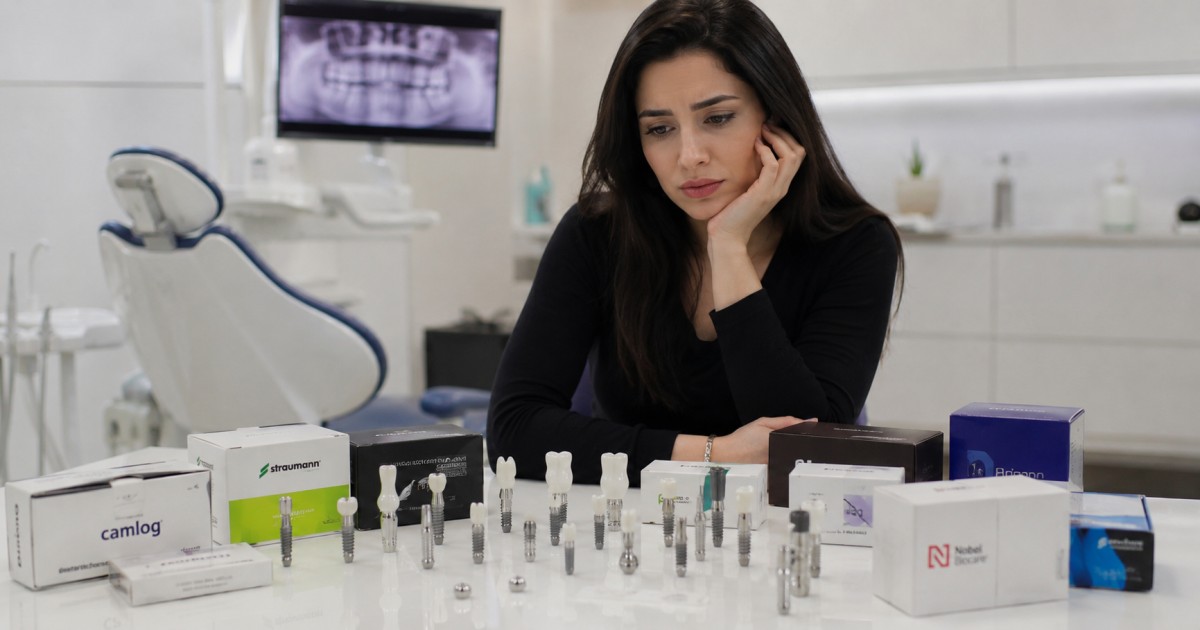
You may need to check: Top Dental Implant Brands 2026 You Should Know Before Choosing
Still Weighing Your Options?
Dental implants and dentures each have advantages, but the best choice depends on your unique situation. Schedule a free consultation with our Toronto dental team to discuss your options, assess your oral health, and make an informed decision with confidence.
Book your free consultation today.
Which Option Is Right for You?
No table can make this decision for you, but these scenarios can point you in the right direction.
- You have enough jawbone and want a fixed, permanent result → implants are likely the stronger long-term fit.
- You want to avoid surgery, need a faster timeline, or have a tighter upfront budget → dentures get you there without the wait or the procedure.
- You’re missing most or all of your teeth and cost is a real constraint → conventional dentures or an implant-supported overdenture are both worth discussing with your dentist.
- Your lower denture keeps slipping and it’s affecting your daily life → an implant-supported overdenture can dramatically improve stability without the full cost of individual implants.
- You have uncontrolled diabetes, smoke heavily, or have been told your bone density is low → these factors can affect whether implants are a safe and viable option, so your dentist will need to weigh in before any decision is made.
Read more: How Smoking Affects Dental Hygiene: Our Dentists’ Guide for Toronto Residents
What if your bone density isn’t enough for implants?
Low bone density doesn’t automatically rule out implants. A bone grafting procedure can rebuild the jawbone and make implant placement possible, but it adds time (often several months of healing) and cost to the overall treatment. The only way to know for sure is a proper assessment. Most clinics use a cone-beam CT (CBCT) scan to evaluate bone volume and quality before recommending any treatment.
Implants & Dentures at Park Dental Centre
If you’re leaning toward implants or dentures (or still weighing your options) Park Dental Centre offers both, with the technology and expertise to do them well.
For implants, the clinic uses 3D cone-beam CT imaging to map your jawbone before a single incision is made, and computer-guided surgery to place implants with precision that isn’t possible freehand. Single implants, implant-supported bridges, full-arch All-on-4 restorations, all are available under one roof.
For dentures, the team handles everything from standard complete and partial dentures to implant-retained overdentures for patients who want more stability without the full cost of individual implants.
Free implant consultations are available at both Toronto locations, and financing options are offered to help spread the cost of treatment. Feel free to contact or visit us; Locations:
- Koreatown: 745 Bloor St W, Toronto, ON M6G 1L6 | (647) 474-7996
- Dundas Square: 29 Elm St, Toronto, ON M5G 1H1 | (416) 971-8181
FAQ
1. Are implants better than dentures?
It depends on your priorities. Implants offer superior longevity and protect your jawbone; dentures cost less upfront and require no surgery. Neither is universally better.
2. Do dentures cause bone loss?
Dentures don’t stimulate the jawbone, so alveolar bone resorption continues over time. Implants slow this process through osseointegration.
3. Can I switch from dentures to implants later?
Usually yes, but years of denture wear can cause bone loss that may require grafting before implants are possible.
4. Does the CDCP cover dentures or implants?
Complete and partial dentures are covered (with preauthorization) for eligible Canadians. Implants and implant-supported dentures are explicitly excluded.
5. Are implant-supported dentures worth it?
For patients with a slipping lower denture or full tooth loss, overdentures offer significantly better stability than conventional dentures at a lower cost than full implants.
6. What happens to your face when you wear dentures long-term?
Ongoing bone resorption can cause the jaw to shrink, leading to a sunken appearance, deepened wrinkles, and a changing facial profile over time.
If you’re still deciding between dental implants and dentures, leave your question in the comments below, or you can share your experiences to help others decide more wisely.