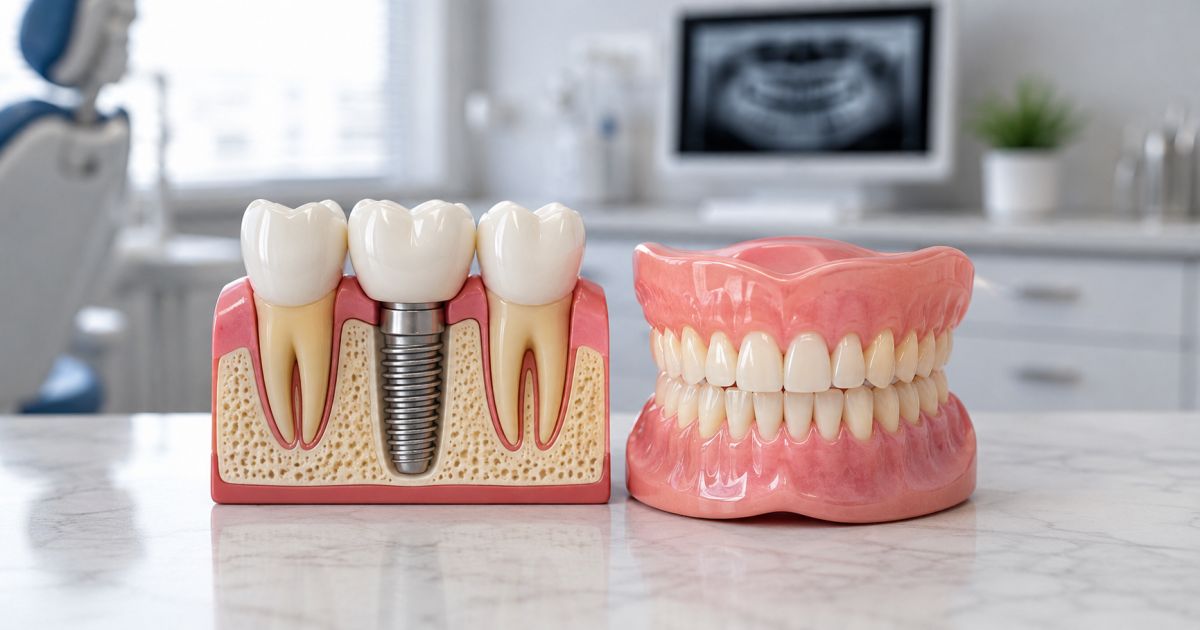
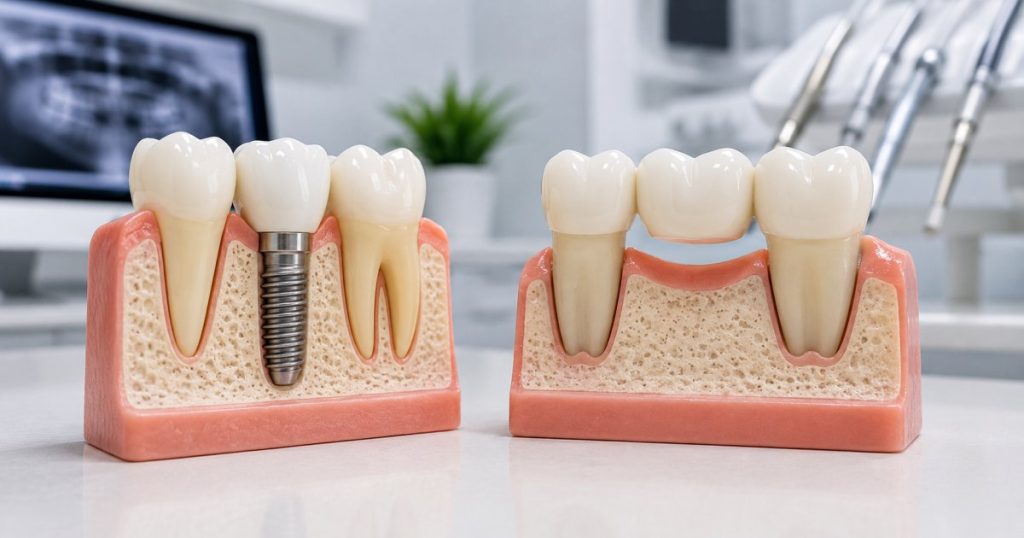
When we talk about implants vs bridges, one of the first things we want our patients to understand is how much a missing tooth can affect daily life. Beyond appearance, it can influence how you chew, how you speak, and how the surrounding teeth move over time. In dentistry, two of the most common solutions we use are dental implants and dental bridges.
If you’re weighing dental implants vs bridges, you should know both treatments can be very effective, but they differ in procedure, longevity, maintenance, and cost. Naturally, many patients are also concerned about implant vs bridge cost, which is an important part of the decision.
In the next sections, we’ll guide you step by step so you can clearly understand which option may suit you best and why.
Implants vs Bridges: What You Should Know Before Choosing
To make it easier for you to see how these two treatments differ in real clinical practice, we’ll walk you through a clear, structured comparison of dental implants vs bridges. This will help you understand not only how each option works, but also how they differ in important areas such as treatment process, longevity, daily care, and overall cost, so you can feel more confident when deciding which option may be right for you.
| Factor | Dental Implant | Dental Bridge |
| Longevity | High long-term survival; studies show ~90%+ survival over 10–20 years and many implants function long-term when osseointegration is successful (PMC) | Lower long-term survival compared with implants; typically shorter prosthetic lifespan in comparative studies (around 10–15 years range reported in prosthetic literature reviews) |
| Procedure | Surgical placement of titanium implant into jawbone followed by osseointegration | Non-surgical restoration; adjacent teeth are prepared and crowned to support pontic |
| Adjacent teeth | Independent restoration; does not require alteration of neighbouring teeth | Requires reduction of adjacent healthy teeth to support crowns |
| Bone health | Preserves bone via functional loading and osseointegration (prevents resorption in edentulous area) | Does not provide direct stimulation to underlying bone, so bone resorption can continue in the edentulous space |
| Treatment time | Requires healing and integration phase; overall treatment spans several months due to osseointegration | Shorter clinical workflow involving preparation and fitting stages; generally completed faster than implant therapy |
| Feel / comfort | High functional stability due to bone integration; closely mimics natural tooth biomechanics | Good aesthetic outcome but biomechanically dependent on adjacent teeth |
| Maintenance | Requires oral hygiene similar to natural teeth; long-term success depends on plaque control and peri-implant health | Requires careful cleaning under pontic area and around abutment crowns |
| Upfront cost | Higher initial investment, but studies show favorable long-term cost-effectiveness due to longevity | Lower initial cost, but may require replacement over time increasing long-term cost burden |
| Best for | Long-term tooth replacement where bone conditions allow implant placement | Shorter treatment time or cases where surgery is not preferred |
| cost | Higher initial cost; typically about $3,000–$6,000 per tooth including crown and components | Lower initial cost; typically about $2,000–$5,000 for a 3-unit bridge |
Important note: These price ranges are general estimates based on the ODA (Ontario Dental Association) Fee Guide and may vary depending on the patient’s specific condition, treatment complexity, materials used, and the clinic’s pricing structure. For an accurate cost estimate, please consult directly with the dental specialists at the clinic.
Remember:
+ Only dental implants help stimulate the jawbone. Without stimulation, gradual bone loss can occur in the area of the missing tooth.
+ Dental bridges are usually completed faster, while dental implants require healing time before final restoration can be placed.
Related Post: Top Dental Implant Brands 2026 You Should Know Before Choosing
Need Help Choosing Between an Implant and a Bridge?
Selecting the right tooth replacement option depends on your oral health, bone condition, lifestyle, and long-term goals. A professional evaluation can help you choose wisely based on your specific needs. Our teams at Park Dental Centres provide personalized treatment planning and advanced diagnostic support in Toronto.
Book your consultation today to explore your options.
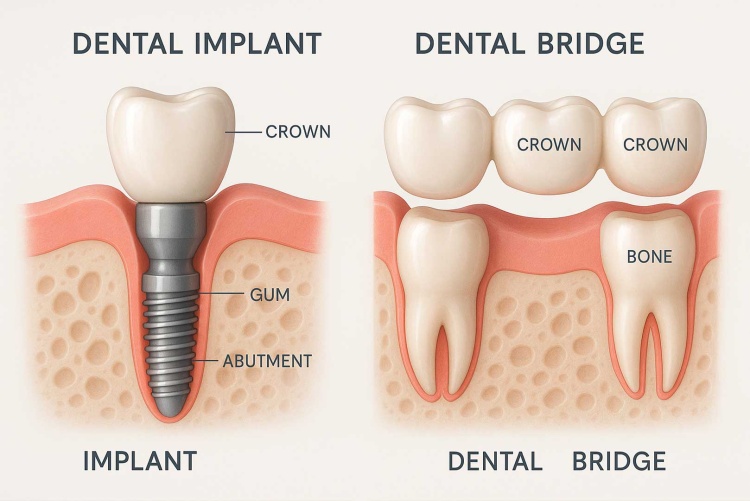
Dental Implants vs Bridges: Which is right for you?
Choosing between a dental implant and a dental bridge depends on your clinical condition, oral health status, and what matters most to you in treatment. Both options can work very well when used in the right situation, but they are not suitable for every patient in the same way.
These “If”s must be considered:
- If you have enough jawbone and you are looking for the most long-term solution, a dental implant is usually preferred, supported by strong long-term survival rates
- If you prefer to avoid surgery or want a faster treatment process, a dental bridge may be more suitable
- If the teeth next to your missing tooth already need crowns or restoration, a bridge can be a practical option because it uses those teeth as support
- If your neighbouring teeth are healthy, an implant is often preferred because it avoids altering natural tooth structure
- If medical or lifestyle factors such as smoking, uncontrolled systemic disease, or reduced bone volume are present, treatment must be carefully individualized based on risk assessment
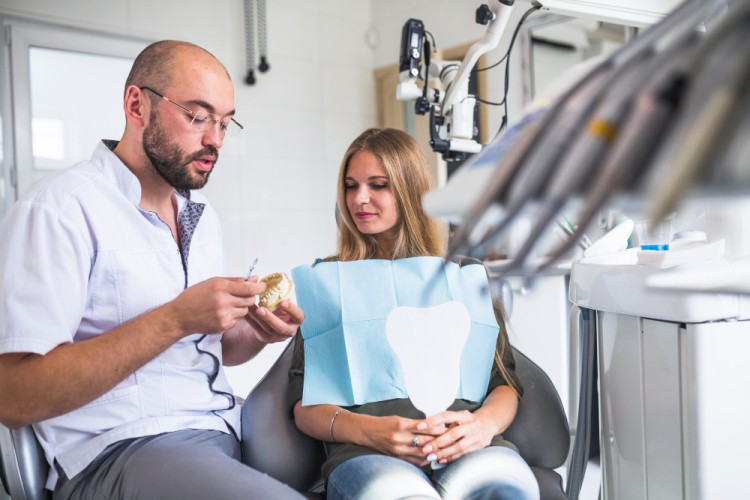
A final decision cannot be made without a proper clinical examination. In most cases, we also need detailed imaging such as CBCT/3D imaging to evaluate bone availability and determine whether implants or bridges are more suitable for you.
Aftercare & Maintenance For Implants & Bridges
Proper daily care and regular professional check-ups are essential for both dental implants and dental bridges to achieve their expected long-term performance and reduce complications.
Consider:
- Dental implants require routine oral hygiene similar to natural teeth. Brushing and flossing are essential to maintain peri-implant tissue health, since long-term success depends strongly on plaque control and preventing inflammation around the implant site.
- Dental bridges require more specialized cleaning because plaque can accumulate beneath the pontic. Patients typically need tools such as floss threaders or interdental cleaning devices to maintain hygiene around the supporting crowns and under the artificial tooth. (Check if Water Flossers Better Than Traditional Floss)
For both treatments, consistent oral hygiene is essential, including brushing with fluoride toothpaste and maintaining healthy gum tissues, since long-term success is closely linked to periodontal and peri-implant health.
Keep in mind: Long-term success of both implants and bridges depends heavily on daily cleaning habits and regular dental check-ups.
Read more: Gum Care Essentials for Toronto’s Dry Winter Air
Implants & Bridges at Park Dental Centre
We provide both dental implants and dental bridges as tooth replacement solutions, helping patients restore function, comfort, and confidence. Our clinic uses advanced diagnostic and treatment planning technologies, including 3D cone-beam CT imaging and computer-guided implant surgery, to support precise and personalized implant care.
With locations in Koreatown (745 Bloor St W) and Dundas Square (29 Elm St), Toronto, Park Dental Centre offers convenient access to restorative dental treatments. Patients can also benefit from a free implant consultation and available financing options to help plan their treatment.
Book a free consultation with Park Dental Centre ((647) 474 7996) to discuss your options and receive a personalized recommendation based on your oral health needs.
FAQ
1. Is an implant better than a bridge?
Neither is always better. Implants often offer longer-term benefits, while bridges may suit patients avoiding surgery or needing crowns.
2. How long does a bridge last compared to an implant?
Implants can last decades with proper care, while bridges typically last about 10–15 years depending on oral health and maintenance.
3. Are bridges cheaper than implants?
Yes. Bridges usually have a lower upfront cost, while implants may offer better long-term value due to durability.
4. Does a bridge damage healthy teeth?
A bridge requires preparing adjacent teeth, which are reduced and crowned to support the restoration.
5. Can a bridge be replaced with an implant later?
Yes, in many cases. However, bone health and clinical conditions must be evaluated before implant placement.
6. Which is faster to complete?
Bridges are usually completed faster, while implants require healing time before the final crown is placed.
Have questions or personal experiences with dental implants or bridges?
Share your thoughts in the comments below.