A dead tooth is a tooth whose dental pulp has lost its blood supply and died. This condition is known as pulp necrosis. The pulp contains the nerves and blood vessels inside the tooth. Once it dies, it cannot recover on its own. However, that does not mean you will lose the tooth.
In many cases, root canal treatment can remove the damaged tissue and save the remaining tooth structure. Read on to learn how to recognise a dead tooth, what causes it, and which treatments can help save it.
What “Dead Tooth” Actually Means
A dead tooth has lost the living tissue inside it, known as the dental pulp. The pulp contains nerves and blood vessels that supply the tooth. When this tissue dies, dentists call the condition pulp necrosis. The outer parts of the tooth, including the dentine and enamel, may still be intact.
The tooth itself has not disappeared or fallen out. It simply no longer has living pulp tissue inside it. A dead tooth is not the same as a lost tooth, and in many cases, treatment can still save it.
Signs Your Tooth Is Dying or Dead
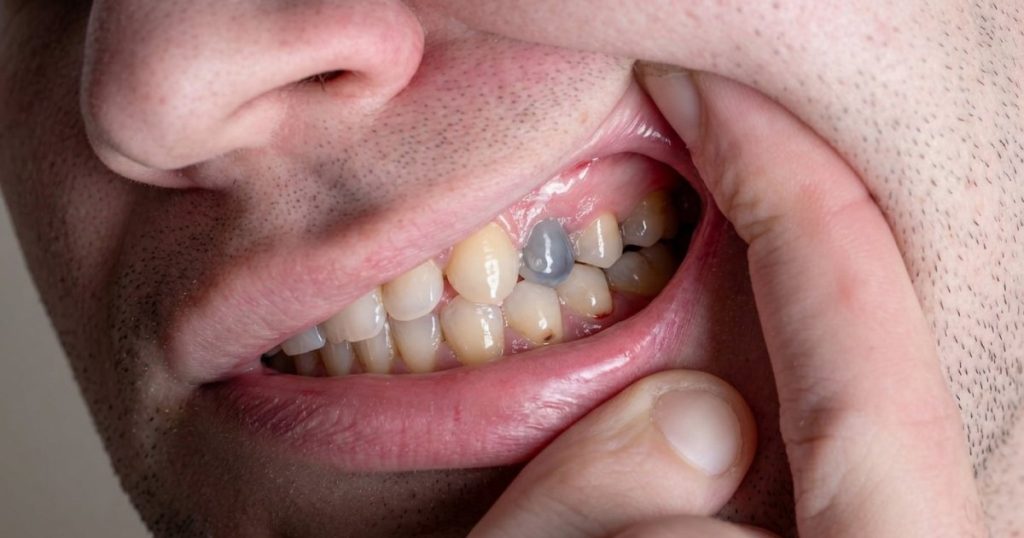
A dead tooth does not always cause pain. You may notice a change in colour, discomfort when biting, or swelling near the affected tooth. Sometimes, the signs are subtle, especially if the pulp has died gradually.
The signs of a dying or dead tooth can include:
| Sign | What it means |
| Grey, brown or yellow discolouration | Changes inside the tooth can cause it to darken. |
| Severe pain that suddenly stops | The pulp may have died, even though the underlying problem remains. |
| No response to cold | The tooth may no longer have a living pulp, particularly if neighbouring teeth respond normally. |
| Pain when biting or pressure | Inflammation around the root may be present. |
| Bad taste or odour | An infection may be draining into the mouth. |
| Gum boil or swelling | An abscess may be forming near the root. |
One important warning: Pain that disappears does not necessarily mean the tooth has healed. It can mean the pulp has finished dying.
According to Cleveland Clinic, dentists diagnose pulp necrosis using a combination of heat or cold testing, electric pulp testing, gentle tapping on the tooth and dental X-rays. A tooth with a dead pulp typically won’t respond to the electric pulse or to changes in temperature, and it may feel painful when tapped.
Read more: Black Spots on Teeth
What Causes a Tooth to Die
Two of the main causes of a dead tooth are tooth decay and dental trauma.
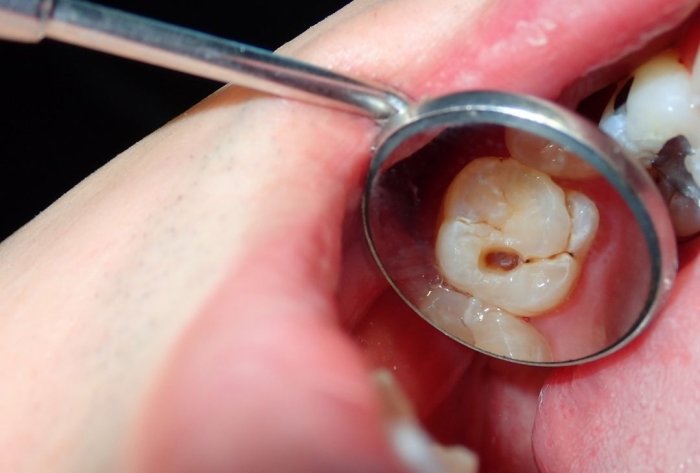
When untreated decay reaches the dental pulp, bacteria can damage the tissue until it dies. A strong blow to a tooth can also damage its blood supply, even if the tooth initially looks normal. The effects of dental trauma may not appear straight away. A tooth knocked during childhood, for example, may turn grey or brown years later.
Repeated dental procedures on the same tooth, a cracked tooth that extends into the pulp, and severe grinding, known as bruxism, can also contribute to pulp damage and death.
Is a Dead Tooth Dangerous?
A dead tooth can become dangerous if bacteria spread from the dead pulp into the surrounding tissues. Without a blood supply, the pulp cannot receive immune cells to fight infection effectively. Bacteria can multiply and spread through the root tip into the surrounding bone.
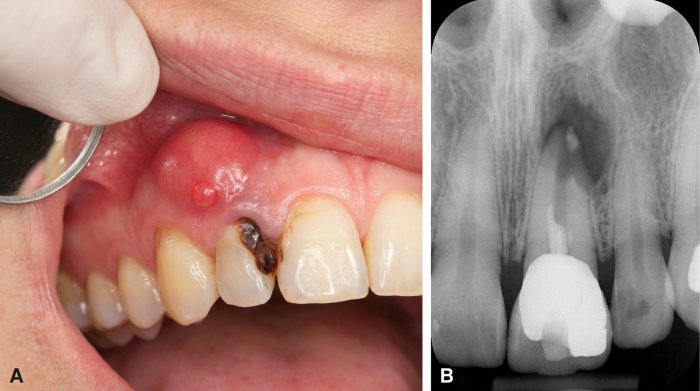
This can lead to a periapical abscess, bone loss and, in uncommon cases, a spreading facial infection called facial cellulitis that requires emergency medical care.
Can a dead tooth kill you? Deaths from dental infections are very rare in Canada, but severe infections can become life-threatening. The absence of pain does not mean the tooth is safe. A dead tooth needs dental assessment and appropriate treatment rather than simply being monitored.
How Long Can a Dead Tooth Stay in Your Mouth?
A dead tooth can remain in your mouth for years without obvious symptoms. This can happen when the infection becomes chronic, a condition known as chronic apical periodontitis. However, as we mentioned earlier, the absence of pain does not mean the tooth is safe. Dental X-rays may reveal a periapical radiolucency, a dark area near the root tip that can indicate bone loss. You may not feel this damage as it develops.
The longer a dead tooth goes untreated, the greater the risk that it will become too damaged to save with root canal treatment and will need extraction instead.
Can a Dead Tooth Be Saved?
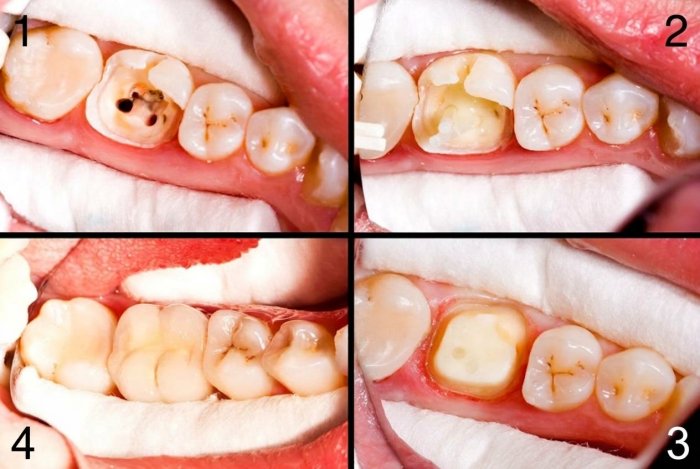
Yes, in most cases, a dead tooth can still be saved with root canal treatment. The dentist removes the dead pulp, cleans and shapes the root canals, then seals them to help prevent further infection. The tooth is then restored to protect its remaining structure.
Success rate:
A systematic review and meta-analysis of 42 clinical studies between 2003 and 2020 found that primary root canal treatment succeeds in about 82% of cases under strict criteria, and in about 93% when partial healing is also counted as success. Success rates have also improved over time.
However, saving the tooth is not always possible. A vertical root fracture, insufficient remaining tooth structure or severe bone loss may make extraction necessary. If the tooth cannot be saved, replacement options may include a dental implant. The right treatment depends on the tooth’s condition and the extent of the damage.
Could Your Dead Tooth Still Be Saved?
A tooth that stops hurting may still have an infection beneath the surface. At Park Dental Centres, we can assess the damage, explain your treatment options and help you find out if the tooth can be saved.
Book Your Dental Appointment
Why a Back Tooth Needs a Crown Afterwards
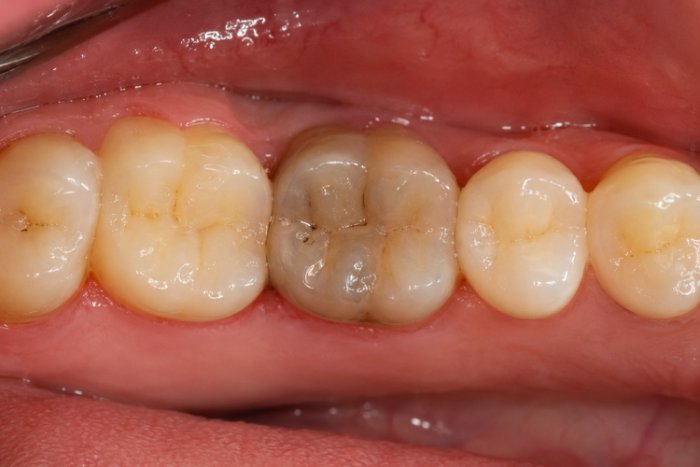
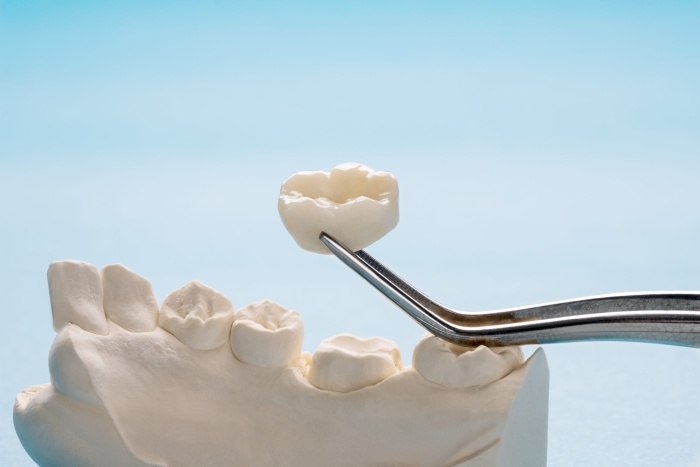
After root canal treatment, a molar or premolar may be more vulnerable to fracture, particularly if significant tooth structure has been lost to decay or previous dental work. So, as Healthline also confirms, a tooth that has had a root canal can become brittle over time. That is why a crown is usually recommended for back teeth, which handle most of the grinding and chewing forces.
A dental crown may also be advised if the enamel was damaged or the tooth already had a large filling, as it provides cuspal coverage that helps protect the remaining tooth from the forces of chewing.
Without adequate protection, the risk of a tooth fracture can increase. If a crack extends through the root, the tooth may no longer be savable. Your dentist can assess whether you need a crown based on the tooth’s condition.
Check out: Types of Dental Crowns in Toronto
Can the Colour Be Fixed?
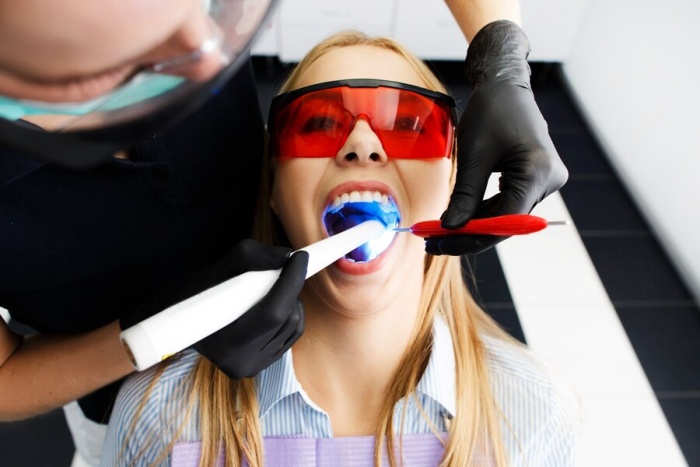
Yes, a discoloured dead tooth can often be lightened after root canal treatment. Internal bleaching, also called non-vital bleaching, treats the discolouration from inside the tooth. The whitening agent is placed inside the treated tooth rather than applied to its outer surface. External whitening alone cannot correct the internal cause of this type of discolouration.
If bleaching does not achieve the desired result, other options include composite bonding, a veneer, or a crown. The best approach depends on the tooth’s colour and remaining structure.
Useful guide: Best Teeth Whitening Options in Toronto 2026
What Happens If You Do Nothing
Leaving a dead tooth untreated can allow the infection to continue developing. Over time, it may cause a periapical lesion, an area of damage around the root tip, and lead to bone loss.
Even if the infection remains quiet for a while, an acute exacerbation can cause sudden swelling and severe pain. As the damage progresses, the tooth may become impossible to save, resulting in tooth loss and the need for replacement.
Delaying treatment can also increase its complexity and cost, so it is best to have the tooth assessed before the problem worsens.

Get a Discoloured or Painless Tooth Checked at Park Dental Centres
If you have a discoloured tooth or one that stopped hurting unexpectedly, a dental assessment can help identify the cause before further damage develops. Park Dental Centre offers root canal therapy, internal tooth bleaching and same-day emergency appointments. The clinic also accepts the Canadian Dental Care Plan (CDCP), subject to eligibility and coverage rules.
Visit either Toronto location to have your tooth examined:
- Koreatown: 745 Bloor St. West, Toronto, ON M6G 1L6. Call (647) 474-7996.
- Dundas Square: 29 Elm St., Toronto, ON M5G 1H1. Call (416) 971-8181.
Your dentist can use clinical tests and dental X-rays to assess the pulp and check for signs of infection around the root.
FAQ
What is a dead tooth?
A dead tooth is one whose dental pulp, containing nerves and blood vessels, has died. Dentists call this condition pulp necrosis.
Is it okay to leave a dead tooth?
No. Even without pain, a dead tooth can develop an infection that spreads into the surrounding bone and tissues.
How do you treat a dead tooth?
Root canal treatment removes the dead pulp, cleans and seals the canals, and restores the tooth. Extraction may be necessary if damage is severe.
Can a badly decayed tooth be saved?
Often, yes. Root canal treatment and a suitable restoration may save it, depending on how much healthy tooth structure remains.
Will a dead tooth eventually fall out?
Not necessarily. However, untreated infection and bone loss can weaken the tooth and eventually lead to tooth loss.
Is a dead tooth dangerous?
It can be. Infection may spread beyond the root, causing an abscess, bone loss or, rarely, a serious spreading infection.
How long can a dead tooth stay in your mouth?
It may remain for years without symptoms, but infection and bone loss can progress silently. Dental assessment is important.
Can a dead tooth be whitened?
Yes. Internal bleaching can lighten a discoloured tooth after root canal treatment. Bonding, veneers or crowns are alternatives.
Have you ever noticed a discoloured tooth or had tooth pain that suddenly disappeared? Share your experience or questions in the comments below.