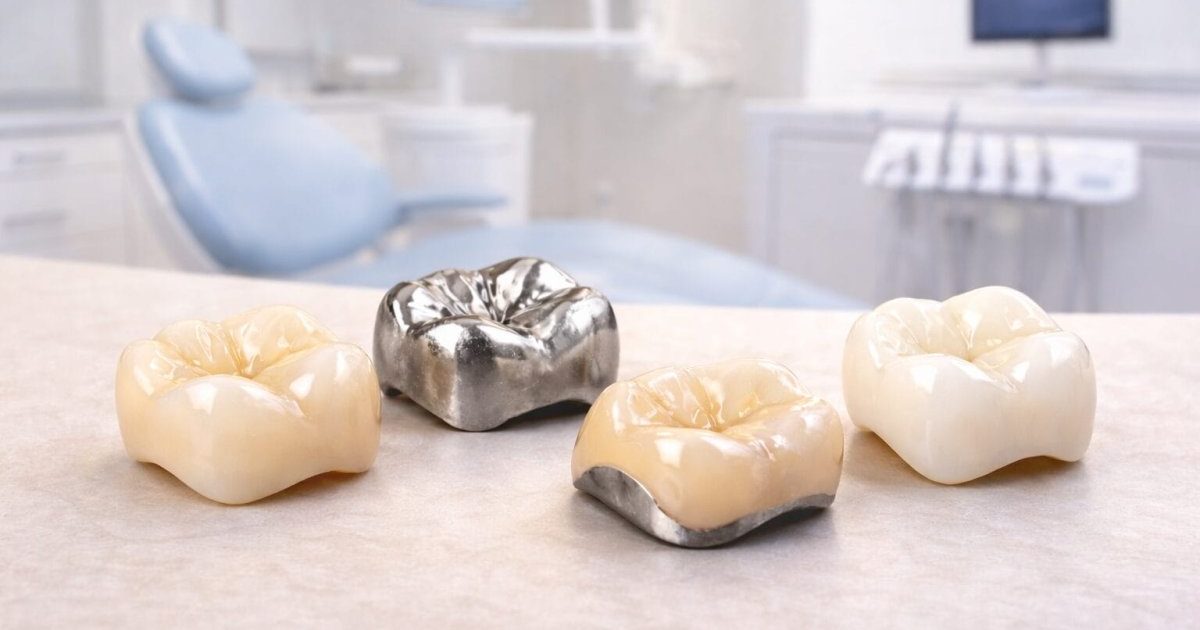
When your dentist mentions you need a crown, the first question is often which of the different types of dental crowns will work best. A dental crown is a custom cap that restores a damaged tooth after decay, a large filling or root canal treatment. The material you choose affects how natural it looks, how strong it feels and what it costs.
Here’s a clear, practical guide to the main options, including same-day crowns, so you can feel more confident about the decision.
What a Crown Does
A dental crown is a protective cover that completely encases a tooth to restore its strength, shape and function. Dentists recommend one after significant tooth decay, a crack, a large filling that weakens the remaining structure, or following root canal treatment. By covering the entire visible portion of the tooth, the crown protects what’s left underneath and helps you chew and speak normally again.
According to the Cleveland Clinic, dental crowns typically last between 5 and 15 years with proper care.
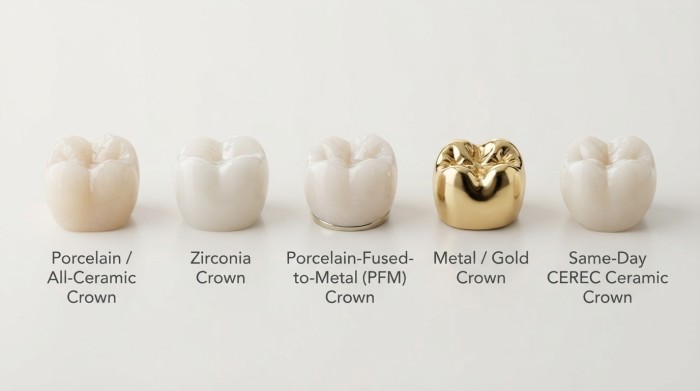
In the sections below, we’ll explain the main types of dental crowns and how they differ in appearance, strength, and everyday use.
1. Porcelain (All-Ceramic) Crowns
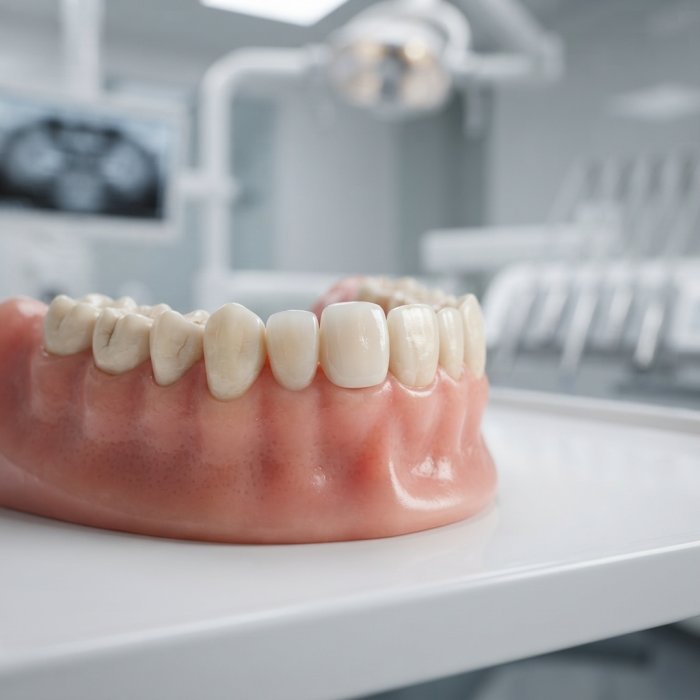
Porcelain or all-ceramic crowns are often the first choice when appearance matters most. Because they contain no metal, they can be matched closely to the colour and natural translucency of your own teeth, making them especially suitable for front teeth that show when you smile. The result looks and reflects light much like real enamel.
The trade-off is strength: while an all-ceramic crown is more than adequate for most people, it can be less resistant to heavy biting forces than crowns that include metal, so it is usually reserved for teeth that do not take the full load of chewing.
2. Zirconia Crowns
Zirconia crowns are made from a high-strength ceramic that stands up well to cracking and everyday wear. They are a solid option for back teeth and for people who grind or clench (bruxism), because they can handle heavy chewing forces without chipping easily. If you grind your teeth at night, anti-grinding night guards may also help protect your teeth from excessive wear.
Newer formulations have improved translucency, so many zirconia crowns now look surprisingly natural as well.
The main trade-off: even the best aesthetic shades can still fall a little short of pure porcelain in lifelike light reflection, although the difference continues to narrow with each material update.
Research findings
A large practice-based study found that all-zirconia was the most frequently chosen material for posterior crowns (32%), closely followed by porcelain-fused-to-metal (31%).
Read more: Teeth Grinding While Driving in Toronto
3. Porcelain-Fused-to-Metal (PFM) Crowns
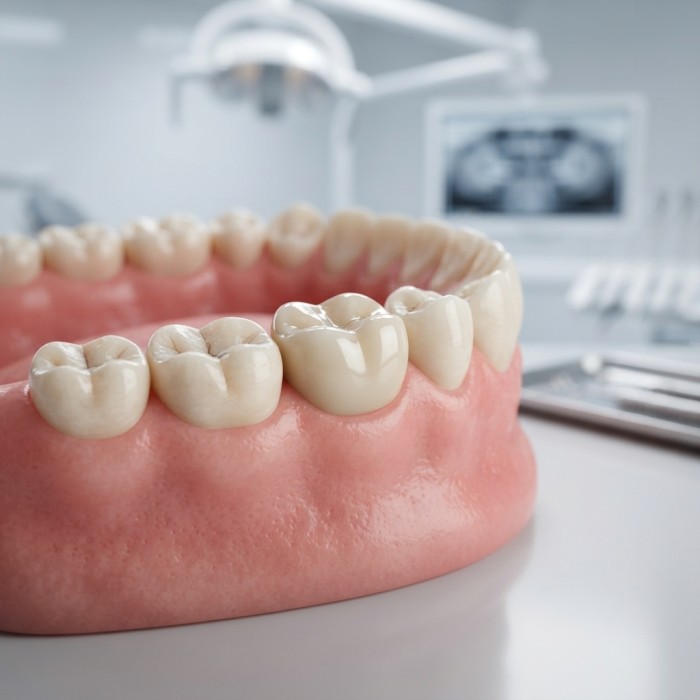
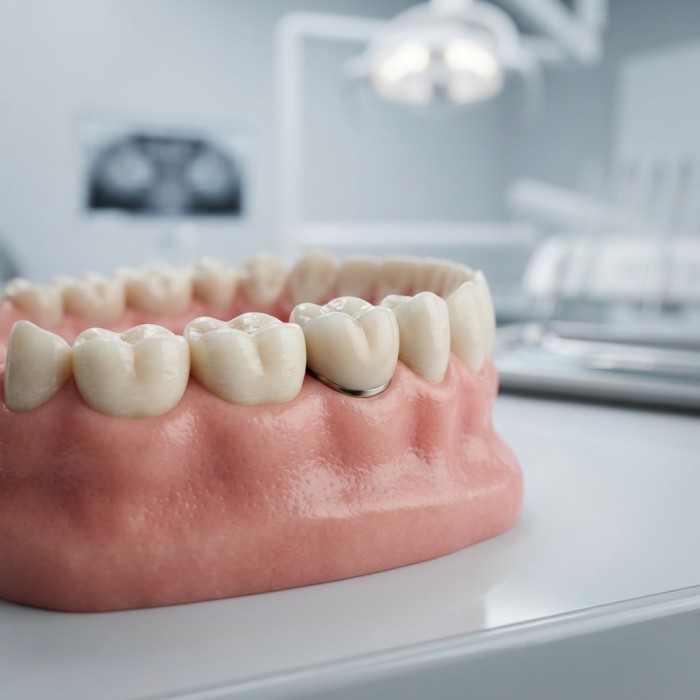
Porcelain-fused-to-metal crowns have been a reliable choice for decades. They have a strong metal base that provides durability, with a porcelain layer on the outside that can be matched to the colour of your natural teeth. This combination provides good strength for everyday chewing while still looking fairly natural.
One drawback can appear over time: if your gums recede, a thin dark line from the metal underneath may become visible at the gum line. This can be more noticeable when the crown is on a front tooth.
Related topic: Teeth Staining Prevention: The Best Daily Oral Hygiene Routine That Works
4. Metal (Gold and Alloy) Crowns
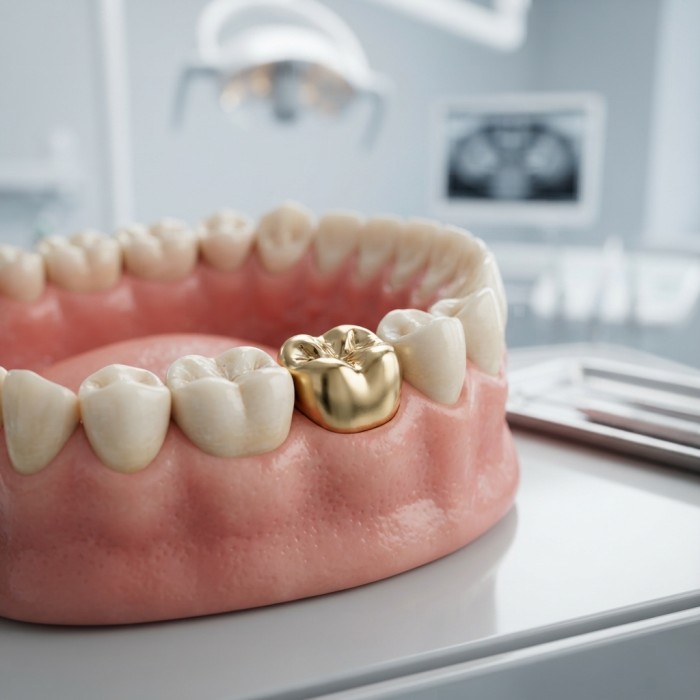
Metal crowns, whether made from gold or other metal alloys, remain one of the most durable options available. They almost never chip or fracture and are gentle on the opposing teeth because the metal wears at a rate similar to natural enamel. These qualities make a gold crown or metal alloy crown an excellent choice for back molars that stay out of sight when you smile.
The main trade-off is appearance: the metallic colour means they are rarely used where the crown will be visible.
5. Same-Day (CEREC) Crowns: A Different Choice
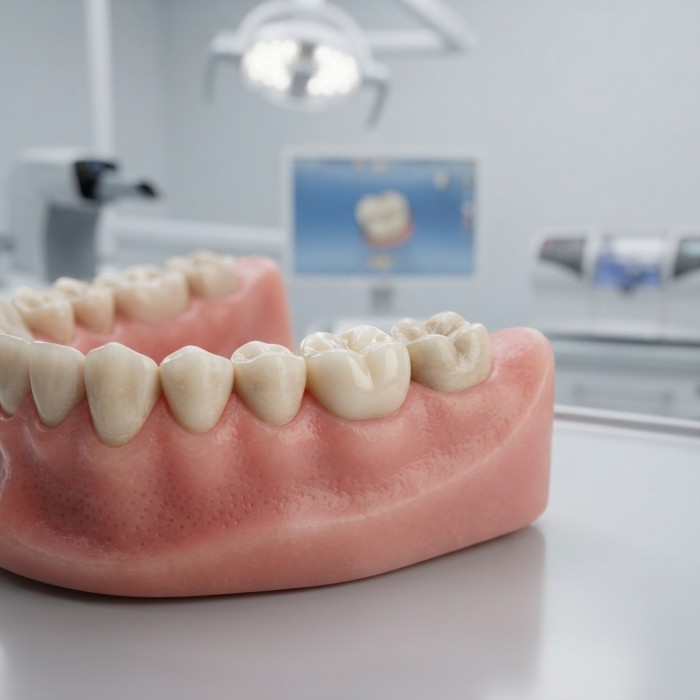
A CEREC crown is a ceramic crown that is designed and made right in the office using CAD/CAM technology and 3D scanning.
Everything happens in a single visit: the tooth is prepared, the crown is made on the spot, and it is placed the same day, with no temporary crown or second appointment. At Park Dental Centre, a CEREC crown can last 10 to 15 years or more with proper care.
The main trade-off is convenience and using a single ceramic material instead of the wider range of materials available with a traditional lab-made crown.
Which Type of Crown is the Best for You?
We know that choosing between different types of dental crowns can be confusing. But, at Park Dental Centre, we assess your tooth, bite and priorities, explain the available options, and help you choose the best type of crown that perfectly fits your needs and budget.
Book a Crown Consultation!
How to Choose among Different Types of Dental Crowns
Choosing the right crown comes down to three practical factors: where the tooth is in your mouth, how much force it has to handle, and how important a natural look is to you. The table below gives a quick side-by-side comparison of the main types of dental crowns so you can see the trade-offs at a glance:
| Crown Type | Best For | Strength | Appearance |
| Porcelain / all-ceramic | Front teeth, best looks | Good | Most natural |
| Zirconia | Back teeth, grinders | Very high | Natural, very strong |
| Porcelain-fused-to-metal | All-rounder | High | Natural (possible gum line) |
| Metal / gold | Back molars | Highest | Metal-coloured |
| CEREC (same-day ceramic) | One-visit convenience | Good | Natural |
Remember: No single material is best for every situation. Your dentist will weigh the specific condition of the tooth, your bite and your priorities before recommending the most suitable choice.
Read more: Porcelain vs Composite Veneers in Toronto
What to Ask Your Dentist
Before choosing a crown material, a few practical questions can help you and your dentist decide what works best for you. Ask or discuss:
- Is the tooth a front tooth or a back tooth?
- Do you grind or clench your teeth?
- Would a same-day crown be a good option for me?
- What does my budget allow?
- What does my insurance cover?
The best material depends on the tooth being treated and your priorities. Your dentist can assess the tooth during your exam and explain the options as part of your treatment plan.

Crowns at Park Dental Centre
At Park Dental Centre we offer different types of dental crowns including both traditional lab-made crowns and same-day CEREC crowns, so you can choose the approach that best fits your schedule and needs.
We use in-office 3D and CT imaging for precise planning, and our crown fees range from $1,500 to $2,000 each, following the Ontario Dental Association fee guide. Direct billing is available, and we accept CDCP, NIHB and IFHP coverage.
Dr. Andre Hughes, DDS (University of Toronto), leads the team with more than 20 years of experience in restorative and implant dentistry. He is a member of the Royal College of Dental Surgeons of Ontario (RCDSO) and the Ontario Dental Association, and a Fellow of the International Congress of Oral Implantology.
You can visit us at either of our Toronto locations: Koreatown (745 Bloor St W) or Dundas Square (29 Elm St). To explore your options in more detail, or to book a consultation, get in touch with the team.
FAQ
What are the different types of dental crowns?
Porcelain (all-ceramic), zirconia, porcelain-fused-to-metal (PFM), metal/gold, and same-day CEREC ceramic crowns.
Which dental crown material is best?
No single best material exists. The right choice depends on the tooth’s location, bite force, appearance needs and budget.
Is zirconia stronger than porcelain?
Yes. Zirconia is significantly stronger and more resistant to cracking than traditional porcelain, especially for back teeth.
What is a porcelain-fused-to-metal crown?
A PFM crown has a metal core for strength covered by a porcelain layer for a more natural appearance.
What is a same-day (CEREC) crown?
A ceramic crown designed and milled in-office with CAD/CAM and 3D scanning, placed in one visit without a temporary.
Which crown is best for a back tooth?
Zirconia or metal/gold crowns are preferred for back teeth because of their high strength under heavy chewing forces.
How much does a dental crown cost in Toronto?
At Park Dental Centre crowns typically cost $1,500–$2,000 each, following the Ontario Dental Association fee guide.
Have you already had a dental crown, or is there still something you’re unsure about? Share your experience or drop your question in the comments; we’re here to help.