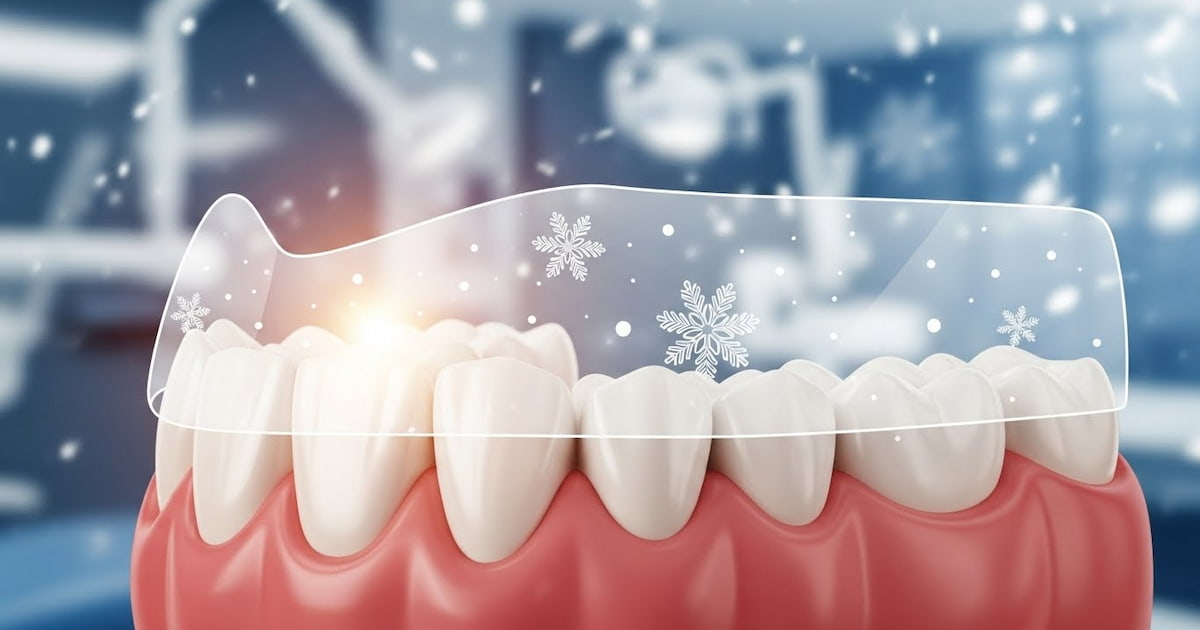

A tooth filling that fell out can feel alarming, but it is rarely a true emergency. Once the filling is gone, the softer layer underneath (called dentine) becomes exposed. That area is more sensitive and more vulnerable to further damage or decay if left unprotected.
In this guide, we walk you through the simple steps to take right away, what you can safely do, and how long it is reasonable to wait before seeing a dentist.
What to Do in the First Hour
Stay calm. These steps keep it clean and comfortable until you can see a dentist:
- If you can find the filling, keep it in a clean container. Do not try to put it back or glue it yourself; that can cause more harm. If you can’t find it, you may have swallowed it. Filling pieces are usually small enough that this isn’t harmful, but mention it to your dentist.
- Rinse your mouth gently with warm salt water. Mix about half a teaspoon of salt in a cup of warm water and swish carefully to clear any food or debris from the cavity.
- Keep the area clean. Brush gently around the tooth, including the open cavity, rather than avoiding it. Soft pressure is enough.
- Chew only on the opposite side of your mouth to protect the exposed dentine.
- Avoid very hot, cold, or sweet foods and drinks for now. These can reach the exposed dentine directly and cause sharp sensitivity.
- If the edge feels sharp or the tooth is sensitive, cover the cavity temporarily with dental wax or a pharmacy temporary filling material. This is only a short-term protective step.
- If the tooth aches, an over-the-counter pain reliever such as ibuprofen or acetaminophen can help. Follow the directions on the label, and ask a pharmacist if you’re not sure it’s right for you.

Can You Use a Temporary Filling From the Pharmacy?
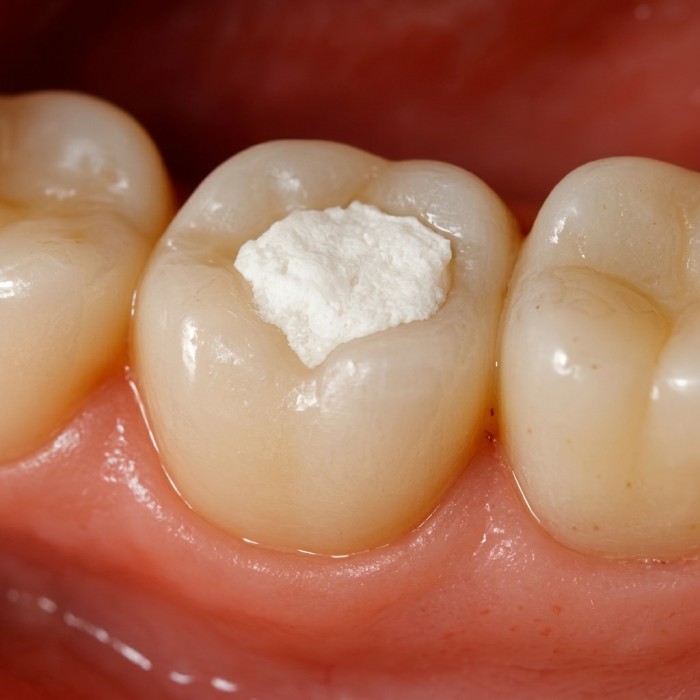
Yes. Over-the-counter temporary filling kits and dental wax are designed for exactly this situation and are safe for short-term use.
These materials help seal the open cavity. They reduce the chance of food packing into the space, limit contact with hot or cold temperatures, and create a basic barrier against bacteria. What they cannot do is restore the tooth. They are not a permanent repair.
Most temporary materials are meant to last only a few days (at most about a week). After that they often wash out or break down. Leaving one in place longer does not stop decay from continuing underneath.
Use the temporary material only as a bridge until you can see a dentist for a proper repair.
How Long Can You Wait?
The right timing depends on your symptoms: If you have pain, swelling, or a sharp edge that is cutting your tongue or cheek, contact a dentist the same day. These signs need urgent attention.
If the tooth is only sensitive to temperature or sweetness but not painful, try to be seen within a few days.
Leaving the problem longer increases the chance that a simple filling becomes a larger restoration. In some cases it can progress to the need for a dental crown or root canal treatment.

What If It Doesn’t Hurt?
No pain does not mean the tooth is fine.
When a filling falls out, the softer dentine underneath is exposed. Food and bacteria can collect in that space even if you feel nothing. Decay can keep progressing quietly.
A tooth that previously had a deep filling may also have a pulp that is less responsive than usual. The nerve that would normally send a warning signal may not be working the same way. This is sometimes called silent decay, which continues without the usual pain signals.
Research Backing: Pain isn’t a reliable sign that a tooth is fine. Decay can develop around a filling without obvious symptoms, and an exam is needed to check (Springer).
That is why a painless lost filling still needs to be checked by a dentist rather than left alone. Even if there is no pain at all, do not put the visit off for long. As also Healthline confirms, we strongly recommend arranging an assessment within a few days rather than waiting a week or more.
Related topic: Dead Tooth: Signs, Causes and Treatment
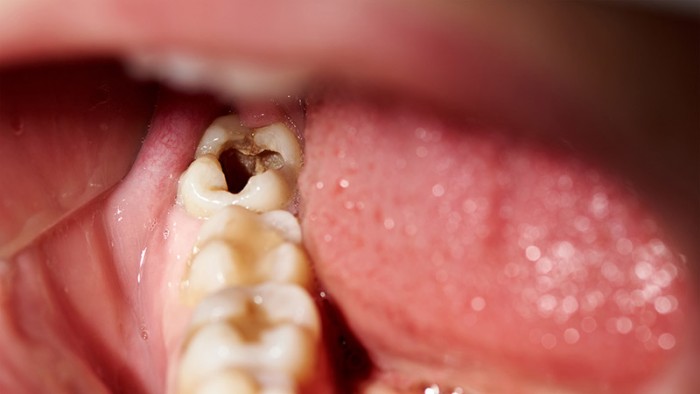
Why Is the Tooth Black Inside?
When a filling falls out, the inside of the tooth can look darker than expected. There are a few possible reasons:
- Old amalgam (silver) fillings can leave grey or black staining on the surrounding tooth structure. This staining is usually harmless.
- The natural colour of dentine is also darker than enamel, so the exposed layer can simply look more yellow or brown.
- The more important possibility is recurrent decay that developed underneath the old filling. This type of decay often continues quietly and is one of the common reasons fillings fail.
Only a dental examination, and often a radiograph, can tell these possibilities apart. The difference matters because it changes what treatment the tooth needs.
Don’t Put Off Getting a Lost Filling Checked
A dental visit can help you understand what your tooth needs and prevent a small repair from becoming a bigger one. At Park Dental Centres, our team will assess your tooth and help you plan the next steps. Same-day emergency appointments are also available at our clinic.
Book Your Appointment
Why Fillings Fall Out
Dental fillings can fall out for several reasons. The most common causes include:
- Recurrent decay: New decay around an existing filling can weaken the tooth.
- Marginal breakdown: The seal between the filling and the tooth can break down over time.
- Normal wear: Fillings wear down gradually with use.
- Bruxism (grinding and clenching): Repeated pressure from grinding or clenching can damage teeth and restorations. A night guard may help protect teeth from grinding-related forces.
- Biting something hard: This can damage a filling or the surrounding tooth.
- Large fillings with little natural tooth left: A large filling may be less suitable when little natural tooth structure remains.
- A cracked tooth: A crack can also cause a filling to become loose.
If a filling repeatedly falls out from the same tooth, the dentist may need to consider a different restoration, such as a crown.
Learn more: Ultimate Guide to Anti Grinding Night Guards for High-Stress Toronto Jobs
What a Dentist Will Do
When a filling falls out, the dentist examines the tooth to determine why it happened and how much healthy tooth structure remains. The treatment depends on the extent of the damage:
- Short-term fix: A sharp edge may be smoothed, or a temporary filling placed, if the tooth needs more treatment first.
- Small to moderate cavity: The dentist may clean the affected area and replace the filling with a composite filling, or another suitable filling material.
- Extensive damage: If too much tooth structure is missing or a cusp is weakened, an inlay or onlay or a dental crown may provide better support. With CEREC technology, some crowns can be designed, made and fitted in one visit, depending on the tooth and clinical circumstances.
- Pulp involvement: If the damage has affected the tooth’s pulp, root canal treatment may be needed before the tooth is restored.
Read more: Types of Dental Crowns in Toronto
Can You Still Eat?
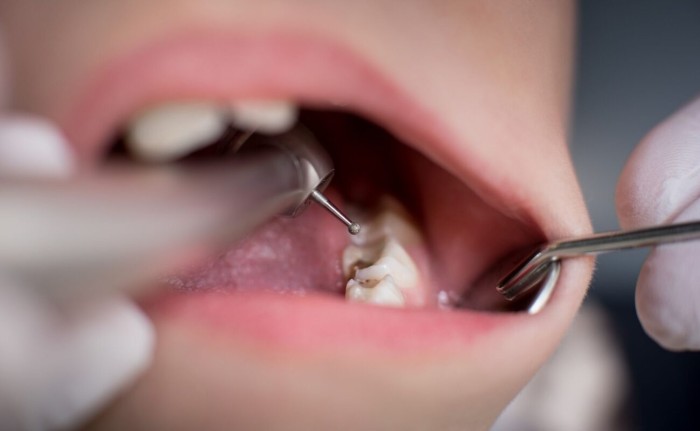
Yes, you can usually eat after a filling falls out, but take care not to irritate or damage the exposed tooth.
Choose soft foods and chew on the opposite side of your mouth. Avoid hard, sticky foods and anything very hot or cold if the tooth is sensitive. Rinse your mouth gently with water after eating to help remove food trapped in the cavity, known as food impaction.
Arrange a dental appointment as soon as possible, even if you have no pain, because the exposed tooth may be vulnerable to further damage.
Read more: Tooth Sensitivity in Cold Weather: What Are the Causes & How to Stop It in Toronto?

What Not to Do
Avoid these common mistakes if you’ve lost a filling:
- Do not try to glue the filling back in place with household adhesive.
- Avoid packing the cavity with chewing gum, candle wax or other improvised materials, as these can irritate the area or trap food.
- Do not place aspirin directly against the tooth or gum. Aspirin can damage the soft tissue and cause an aspirin burn, a type of chemical irritation.
- Even if the tooth stops hurting, do not assume the problem has been resolved. Pain can change without the underlying damage being repaired.
Book a Repair Appointment at Park Dental Centres
If your filling has fallen out, a dentist can examine the tooth and explain what repair it needs. Park Dental Centres offers same-day emergency appointments at its downtown Toronto locations, accepts the Canadian Dental Care Plan (CDCP), and provides CEREC crowns for eligible cases.
The repair may be straightforward, but the treatment and appointment length depend on the condition of the tooth. Contact our emergency dentist in Toronto to arrange an assessment and discuss your options.
FAQ
How long can you leave a filling that has fallen out?
Aim to see a dentist within a few days. Delay risks decay, nerve damage and bigger repairs such as a crown or root canal.
Is it common for a tooth filling to fall out?
Yes. Fillings don’t last forever, and many people lose one eventually. Depending on material and care, they typically last 5 to 25 years.
What will a dentist do if a filling falls out?
They examine the tooth, possibly take an X-ray, then place a temporary or new filling. Larger damage may need a crown or root canal.
Can you still eat if your filling falls out?
Yes, but chew on the other side and avoid hard, sticky, very hot or cold foods. Keep the area clean until your appointment.
Can I use a temporary filling from the pharmacy?
Yes, as a short-term cover only. Follow the label, don’t push it deep, and never use household glue. It doesn’t replace seeing a dentist.
Why is my tooth black inside where the filling was?
Usually either harmless staining from an old silver filling, or decay under the filling. Only a dentist exam can tell which.
Does it matter if it doesn’t hurt?
Yes. A painless tooth can still be damaged or decaying. Pain can change without the problem being repaired, so still book a dentist visit.
Has your filling fallen out before, or are you dealing with it right now? Share your experience or ask your questions in the comments below!